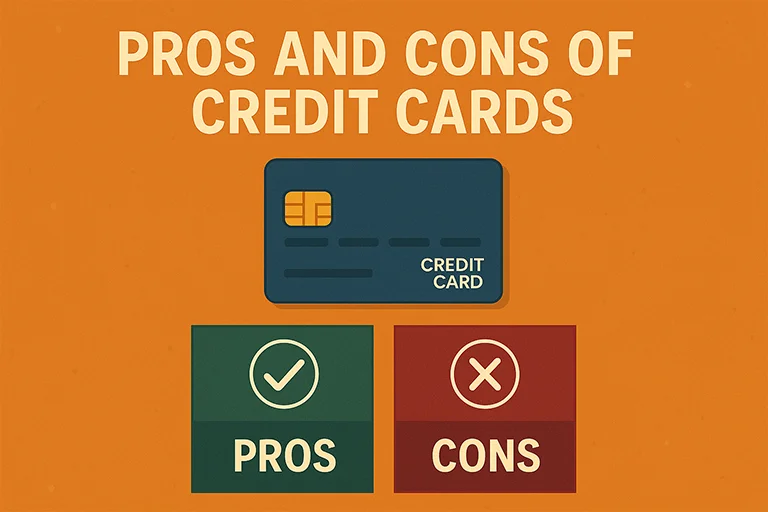
Credit cards have become an essential part of life for people today, offering convenience, rewards, and a credit-building opportunity. However, they also come with potential risks if not used responsibly. Below are the major Pros and Cons of Credit Cards-
Pros of Credit Cards
What's inside?
- 1 Pros of Credit Cards
- 2 Cons of Credit Cards
- 3 How To Use Your Credit Card Right?
- 4 Key Takeaways
- 5 FAQs on Advantages & Disadvantages of Credit Cards
- 5.1 Q. How Much Credit Limit Can I Use?
- 5.2 Q. What is the Insurance That a Credit Card Offers?
- 5.3 Q. Should I Take a Loan or Use the EMI Facility on My Credit Card?
- 5.4 Q. Can I Pay the Minimum Amount Due?
- 5.5 Q. Do Credit Cards Offer a Credit-Free Period?
- 5.6 Q. Do Credit Cards Impact Credit Scores?
- 5.7 Q. Is Using a Credit Card a Good Thing?
- 5.8 Q. Will I Be Able to Withdraw Cash from My Credit Card?
Advantages of Credit Cards | How is it beneficial for a Card Holder? |
|---|---|
| Easy Access to Credit |
|
| Building a Line of Credit |
|
| EMI Facility |
|
| Incentives and Offers |
|
| Flexible Credit |
|
| Record of Expenses |
|
| Purchase Protection |
|
| Convenience |
|
| Consumer Protections |
|
| Potentially Free Financing |
|
| Travel Perks and Reservations |
|
| Spreading Costs |
|
| Boosting Credit Scores |
|
| Added Protection |
|
| Debt Management |
|
| Easy Procedure |
|
| Foreign Currency Transactions |
|
Cons of Credit Cards
Disadvantages of Credit Cards | How it is bad for a card holder? |
|---|---|
| Minimum Due Trap |
|
| Hidden Costs |
|
| Easy to Overuse |
|
| High-Interest Rates |
|
| Credit Card Fraud |
|
| Risk of Overspending |
|
| Potential Debt |
|
| Variable Interest Rates |
|
| Fees |
|
| Damaged Credit Scores |
|
How To Use Your Credit Card Right?
Activities involved in choosing the right Credit card | How it helps? |
|---|---|
| Choose the Right Card | Select a card that suits your spending habits (shopping, travel, fuel, cashback, etc.). |
| Setting Up Alerts | Enable SMS and email alerts to track spending and due dates. |
| Using Autopay | Automate payments to avoid late fees and maintain a good credit score. |
| Spending Only What You Can Afford | Avoid spending beyond your repayment capacity to prevent debt accumulation. |
| Paying the Monthly Balance in Full | Paying the entire bill before the due date helps avoid high-interest charges. |
| Knowing Your Credit Card Interest Rates | Be aware of the interest rates and avoid cash withdrawals, which attract high charges. |
| Paying at Least the Minimum Due | While it prevents default, paying only the minimum due can lead to interest accumulation. |
| Don’t Apply for Too Many at Once | Multiple applications in a short period can negatively impact your credit score. |
| Use Less Than 25% of Your Available Credit | Keeping utilization low helps maintain a high credit score. |
Key Takeaways
| Pros | Cons |
|---|---|
|
|
FAQs on Advantages & Disadvantages of Credit Cards
Q. How Much Credit Limit Can I Use?
Typically, banks offer a credit limit based on your income and credit score. Experts recommend using only 30-40% of your limit to maintain a good credit score.
Q. What is the Insurance That a Credit Card Offers?
Some cards provide travel insurance, purchase protection, and accidental insurance.
Q. Should I Take a Loan or Use the EMI Facility on My Credit Card?
Loans generally have lower interest rates than credit card EMIs. Choose based on your financial situation and interest burden.
Q. Can I Pay the Minimum Amount Due?
Yes, but it leads to interest accumulation on the remaining balance.
Q. Do Credit Cards Offer a Credit-Free Period?
Yes, most cards offer an interest-free period of 20-50 days, after which interest is charged.
Q. Do Credit Cards Impact Credit Scores?
Yes, responsible usage improves your credit score, while missed payments damage it.
Q. Is Using a Credit Card a Good Thing?
Yes, if used wisely. They provide financial flexibility, rewards, and credit-building opportunities.
Q. Will I Be Able to Withdraw Cash from My Credit Card?
Yes, but cash withdrawals attract high interest rates and fees.

Digital marketing professional with over 10 years of experience across multiple areas including WordPress website management, email marketing, SMS marketing, Mail server administration (Linux), Google Ads, and basic programmatic advertising (DSP). With hands-on experience in content management, affiliate marketing contributes to delivering optimized digital solutions and smooth website operations.